
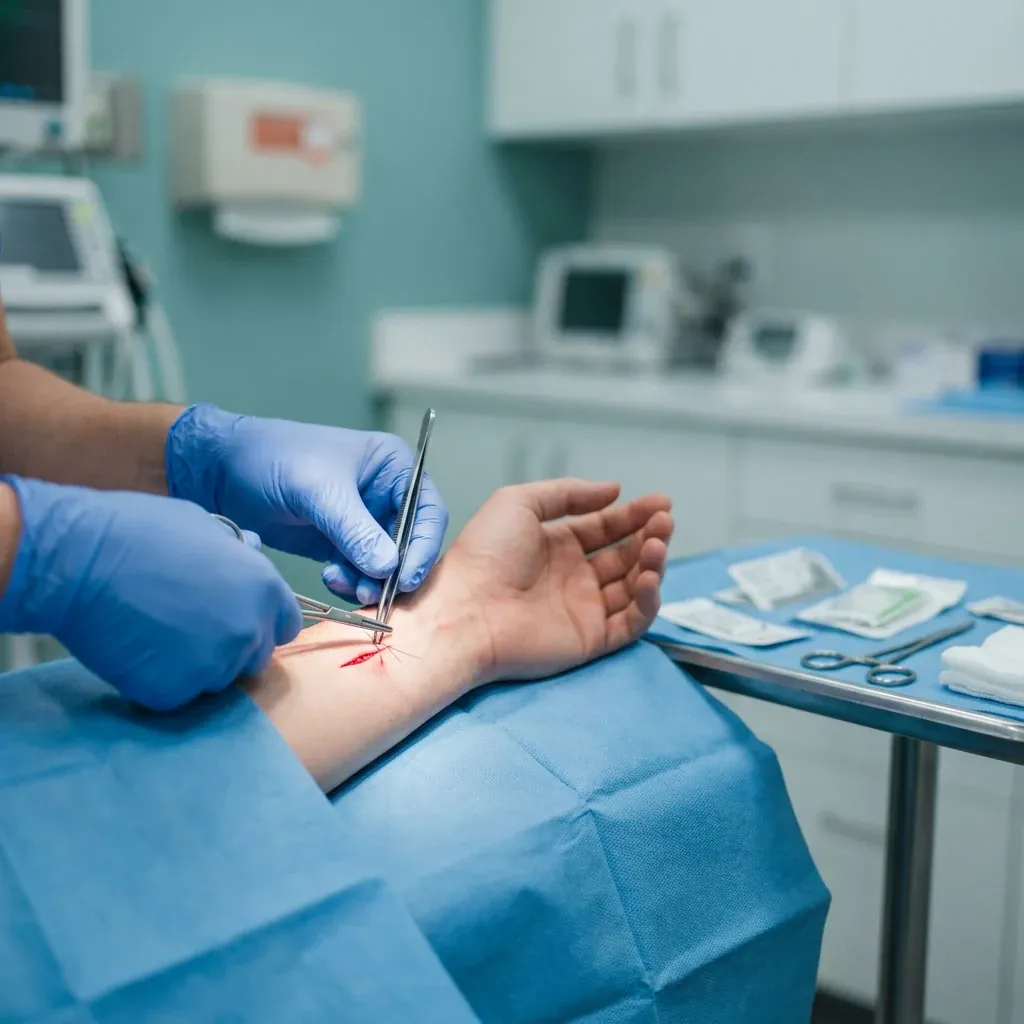
Wound Suturing
Sutures (stitches) to close wounds safely, walk-ins welcome and in Spanish.
- Wound closure with sutures
- Cleaning and disinfection
- Walk-ins welcome
- After-care instructions
A cut in the kitchen, at work or while playing: most heal with cleaning and a bandage, but some need stitches to close properly, heal faster and leave less of a mark. At the clinic we assess the wound, close it under local anesthesia and tell you how to care for it.
How do I know if my cut needs stitches?
- The edges gape apart and won't come together on their own.
- It's deep: you can see yellow fat or tissue under the skin.
- It's longer than a couple of centimeters or sits where the body bends, such as a knuckle or knee.
- It's on the face, where scarring matters more.
- It keeps bleeding after several minutes of pressing it with a clean cloth.
How long can I wait?
Coming in within the first hours is best. As time passes the risk of infection goes up and, for some wounds, late closure is no longer a good idea; they are left to heal open with dressing changes instead.
What happens at the visit?
- We check the wound and the feeling and movement in the area.
- We numb it with local anesthesia so you don't feel pain.
- We clean it thoroughly and remove dirt or debris.
- We close it with stitches and put on a dressing.
- We check your tetanus shot: dirty wounds may need a booster.
Aftercare at home
For a day or two, don't let the dressing get wet. After that, clean the area with mild soap and water and dab it dry. Stitches come out 5 to 14 days later, depending on where they are; we give you the date before you leave (MedlinePlus).
When should I go straight to the ER?
If blood is spurting or won't stop with pressure, if you can't move or feel a finger, if an animal bite is large or if something is stuck in the wound.
Frequently asked questions
Other services
Wound Care
Cleaning, wound care and dressing changes for proper healing, in Spanish.
Learn moreTreatmentsMinor Surgery
Minor outpatient surgical procedures (moles, cysts, lipomas) with local anesthesia.
Learn moreTreatmentsAbscess Drainage
Drainage of abscesses and skin infections to relieve pain and promote healing.
Learn more