Electrocardiogram (EKG)
Fast, painless electrocardiogram (EKG) to evaluate your heart health, in Spanish.
- Fast and painless test
- Heart-rhythm evaluation
- Useful for medical exams
- Results in Spanish
An electrocardiogram (EKG or ECG) puts on paper how your heart is beating. It is quick, painless and gives valuable information about heart rhythm and function, which is why it is one of the most requested tests in checkups and exams for work or surgery.
How is it done?
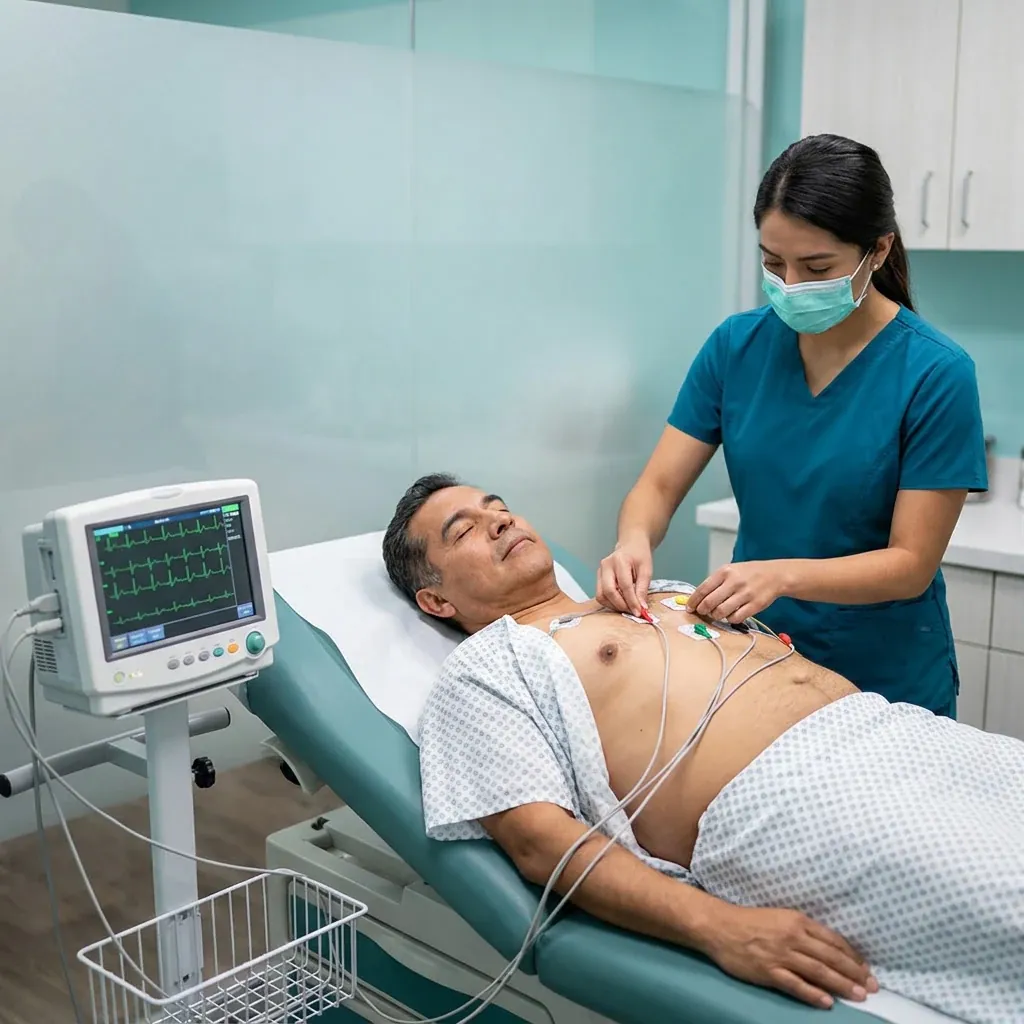
While you lie down, we stick small electrodes on your chest and limbs. For a few minutes you stay still and breathe normally while the machine records the signals. No electricity goes into your body: it only "listens" to what your heart produces (MedlinePlus).
To prepare: wear a two-piece outfit so your chest is easy to uncover, and skip lotions or oils on your skin that day, since they keep the electrodes from sticking well.
What can it show?
- Heartbeats that are too fast, too slow or irregular.
- Signs the heart has been overworked, as with years of high blood pressure.
- Evidence of an old heart attack that went unnoticed.
- Changes that call for a closer look.
A normal EKG is good news, but it doesn't rule out every heart problem: it is a snapshot of that moment. If the result or your symptoms call for it, we guide you toward cardiology testing.
When is it a good idea?
- If you feel palpitations or your heart "skips" beats.
- If you live with hypertension, high blood sugar or elevated cholesterol.
- Before surgery, when the surgeon requests it.
- For work or sports checkups that require it.
What if I have chest pain right now?
That's a job for 911, not the clinic. Heavy chest pressure along with breathlessness, a cold sweat or discomfort moving down the arm or up to the jaw may be a heart attack.
Frequently asked questions
Other services
Ultrasound & Sonography
Diagnostic and pregnancy ultrasounds with modern equipment and care in Spanish.
Learn moreTreatmentsUrinalysis & Urinary Infection Treatment
In-clinic urinalysis and urinary infection treatment, in Spanish.
Learn moreTreatmentsFlu and Tetanus (Tdap) Vaccines
Influenza (flu) vaccine and tetanus toxoid, administered by medical staff, in Spanish.
Learn more